08/04/2024
E-steel Successfully Supplies High-Strength Ship Plates
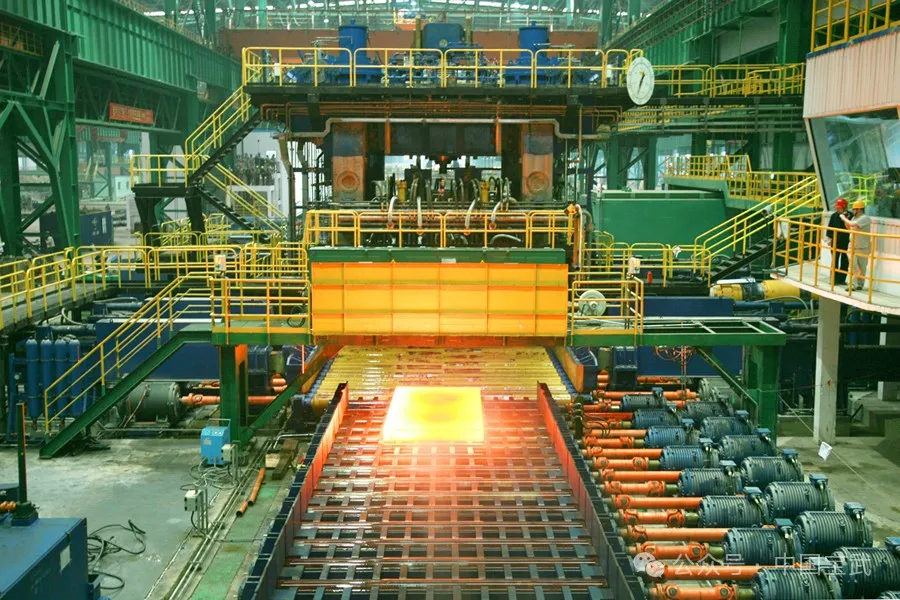
Recently, 1,800 tons of high-strength ship plates (DH690 quenched and tempered ship plate steel for welded structures) were sent to Guangdong from Zhongnan Steel Echeng Steel and used to construct national large-scale LNG-powered ships.
Read More
H-beams and I-beams are different in shape.
I-beams are mainly divided into ordinary I-beams, lightweight I-beams, and wide-flange I-beams. Based on the flange-to-web height ratio, they are further divided into wide, medium, and narrow wide-flange I-beams. The first two types are produced in sizes 10-60, corresponding to heights of 10-60cm.H-beams are a widely used profile in modern steel structure construction. The main difference between them and I-beams lies in the flange design—H-beams have no inclination, and the upper and lower surfaces are parallel, providing more uniform cross-sectional properties. Due to their optimized cross-sectional area distribution and strength-to-weight ratio, H-beams have become an economical and efficient profile choice.I-beams: Due to their relatively high and narrow cross-sectional dimensions, I-beams have a significant difference in moments of inertia about their two principal axes, making them suitable for members subjected to bending within the plane of their web or for forming lattice-type load-bearing members. However, I-beams are not suitable for applications requiring axial compression or bending perpendicular to the web plane.H-beams: H-beams offer higher load-bearing capacity and better structural stability, making them suitable for high-rise buildings, heavy-duty factories, large bridges, and other projects with high requirements for structural strength and stability. Their optimized cross-sectional design allows for efficient use of steel, increasing load-bearing capacity and facilitating connection with other components using high-strength bolts.I-beams: Flexible design, easy to cut and weld; resistant to aging, long service life; lightweight, convenient construction, helping to shorten construction time; aesthetically pleasing, meeting general aesthetic standards; possesses good insulation, magnetic permeability, and fire-retardant properties.H-beams: High structural strength, saving metal materials; diverse design styles, more flexible building layout; lightweight, reducing foundation requirements and lowering costs; good structural stability, particularly suitable for buildings in earthquake-prone areas; increases usable area, improving economic efficiency; easy to process, connect, and install, supporting industrialized manufacturing.
Hello, thank you very much for your question. Factory audits are a very important and wise consideration in international procurement.CSMC's third-party oversight service fully includes the core element of "factory inspection," and this is one of our key services in helping global buyers mitigate risks and verify the strength of suppliers.Regarding your need to understand the true strength of a steel mill in Hebei, our third-party oversight service can provide you with professional assurance from the following aspects:We will dispatch an experienced professional factory inspection team to the steel mill you designate. They will conduct on-site inspections of the plant's scale, production equipment (such as the quantity and brand of blast furnaces, converters, and rolling lines), compliance of environmental protection facilities, and assess the actual operating rate and capacity. This effectively avoids encountering shell companies or unqualified intermediaries.At the same time, we will verify the authenticity of the steel mill's business license, invoicing qualifications, ISO quality system certification, export license, and other complete qualification documents on-site to ensure that it is a legitimate factory with legal operating and export capabilities.We will also assess their technical capabilities, including whether they can produce the specific specifications you require (such as high-strength steel or special-sized plates), the completeness of their quality control processes, and the adequacy of their laboratory equipment, to comprehensively determine whether they possess the technical strength to meet your order.After the factory audit, we will provide you with a document containing photos, videos, and a written assessment to provide the most objective basis for your purchasing decision.Our oversight service is independent of both the buyer and seller. Our factory audit standards and reports are solely responsible to the buyer, ensuring objective and impartial information.
If needed, you can click on the manual contact window to tell us your detailed requirements. Our oversight team will develop a professional factory audit plan based on your needs and provide you with services.
The naming convention for DX51D+Z follows the European standard EN 10346. DX51D+Z is a common designation for galvanized steel sheet, with the letter Z representing the hot-dip galvanizing process. The yield strength of ordinary DX51D+Z is typically between 140-300 MPa, with the specific value influenced by the zinc layer thickness and the substrate composition.The substrate is low-carbon steel with a low carbon content, thus possessing good ductility and formability, suitable for bending, roll forming, and shallow drawing. However, deep drawing requires higher grades (such as DX53D+Z and DX56D+Z). The galvanized layer is formed through a hot-dip galvanizing process, providing cathodic protection and effectively preventing corrosion of the steel substrate.
DX51D+Z is a common galvanized sheet with a low-carbon steel base material. A zinc-iron alloy layer is formed on the surface through a hot-dip galvanizing process, resulting in good corrosion resistance and processing performance. This material is mainly used in industrial and civilian applications requiring rust prevention.Physical Properties: Hot-dip galvanized DX51D+Z material has high strength and hardness, enabling it to maintain stability and durability under heavy loads and complex working environments. Its good ductility and toughness also allow it to easily handle various deformation requirements during processing, meeting diverse design needs.Chemical Properties: The surface of hot-dip galvanized DX51D+Z material is covered with a dense zinc layer, which effectively isolates oxygen and moisture, preventing corrosion of the metal substrate. Simultaneously, the zinc layer itself has good electrochemical properties, resisting electrochemical corrosion to a certain extent. This corrosion resistance allows hot-dip galvanized DX51D+Z material to maintain a long and stable service life under harsh conditions such as outdoor, humid, and marine environments.Hot-dip galvanized DX51D+Z material can be joined using various welding methods, and its surface can also be coated to further improve its corrosion resistance and aesthetics. These characteristics have led to the widespread application of hot-dip galvanized DX51D+Z material in construction, bridges, vehicles, ships, and other fields.
China Steel Market
Empowering small and medium-scale steel purchasing
Hot search words:
China Rebar prices China Wire Rod Prices